

 See My Latest Article on HelloNation
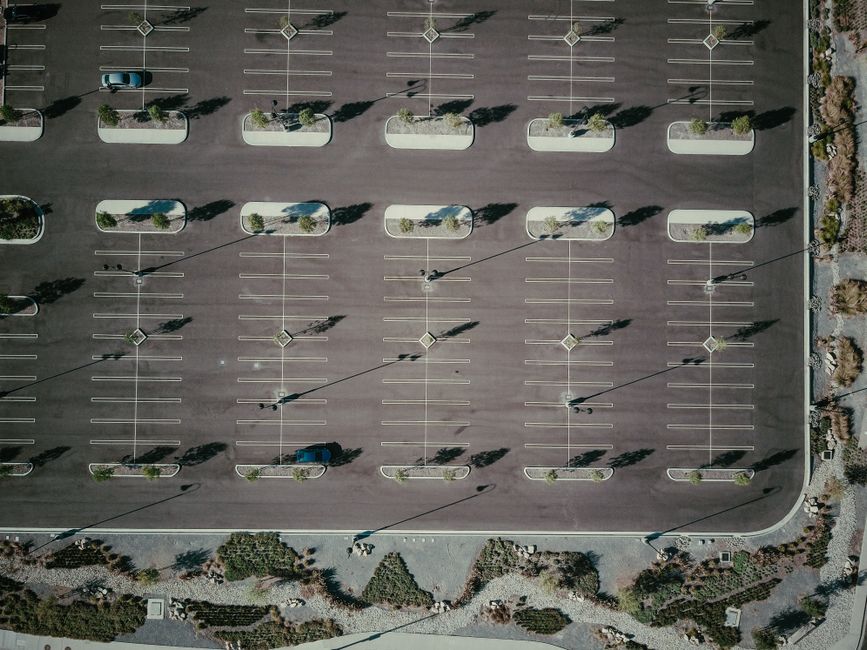
Why surface water collects in parking lots
Parking lots are built from largely impervious materials, so rain cannot soak into the ground as it would in a lawn or planted area. Water instead moves across asphalt and concrete until it reaches a low point, a curb, a catch basin, or a trench drain.
In Columbus, heavy summer rain, freeze-thaw cycles, fallen leaves, winter grit, and melting snow can all expose weaknesses in a drainage layout. A lot may appear adequately sloped during light rain but still develop standing water during a short, intense storm.
Surface water creates several practical problems:
- Slippery walking areas near entrances and crosswalks
- Hydroplaning or reduced tire traction
- Ice formation after winter precipitation
- Premature pavement deterioration
- Sediment and litter carried into storm inlets
- Water flowing toward building doors, loading areas, or accessible routes
The goal is not simply to move water away quickly. A functional system must collect runoff at the right locations, convey it safely, and address the sediment and pollutants that water can carry from paved surfaces.
What is a trench drain?
A trench drain is a narrow linear channel installed flush with the pavement. It typically includes a grated top, a channel body, and an outlet connected to a stormwater conveyance system or approved control practice.
Unlike a point inlet, which collects water at one opening, a trench drain can intercept runoff along an entire line. That makes it useful across:
- Parking lot entrances and exits
- Areas in front of garage doors
- Loading and unloading zones
- Pedestrian crossings
- Sloped drive aisles
- Transitions between pavement and buildings
- Low edges beside retaining walls or curbs
The drain must be set at the correct elevation. If the surrounding pavement is flat, uneven, or settled, water may bypass the grate or remain trapped beside it.
A trench drain is also not a substitute for overall grading. It works best as part of a complete layout that directs runoff toward the drain without creating unsafe slopes or inaccessible walking surfaces.
Where should trench drains be placed?
Placement depends on the direction of runoff, the slope of the pavement, the expected traffic, and the location of nearby structures. A drain positioned in the wrong place may collect very little water even if the channel itself is properly constructed.
Common locations include the bottom of a sloped parking aisle, across a driveway entrance, or along the edge of a building where runoff would otherwise reach doors or walls.
Designers generally examine:
- The contributing drainage area
- Pavement slopes and cross-slopes
- The location of curbs, islands, and wheel stops
- Pedestrian and vehicle travel paths
- Door thresholds and accessible routes
- Pipe capacity and downstream discharge points
- Access for cleaning and inspection
Long drains may require multiple outlets or carefully calculated channel slopes. Without adequate outlet capacity, the trench can fill during the same storm it was intended to manage.
The City of Columbus Stormwater Drainage Manual addresses stormwater conveyance, curb inlets, catch basins, storm sewers, and related drainage facilities. Proposed private development plans may also require stormwater review and approval before final site and building plans are approved. ([columbus.gov](https://www.columbus.gov/Business-Development/Building-Zoning-Services/Building-Plan-Review/Storm-Water-Management-and-Sanitary-Sewer-Plans-CC-Plans?utm_source=openai))
How do trench drains differ from catch basins?
A trench drain collects water continuously along a line, while a catch basin collects water at a localized opening. Neither option is automatically better; the appropriate choice depends on the shape and use of the site.
A catch basin may work well where pavement slopes toward a defined low point. A trench drain may be more effective where water crosses a wide entrance, spreads across a drive aisle, or approaches a building along a broad edge.
Many parking lots use both systems. For example, a trench drain can intercept flow at an entrance while catch basins manage runoff across the main paved area.
One common misconception is that adding more grates always improves drainage. If the downstream pipe, outlet, or stormwater control is undersized or blocked, additional inlets may only move water into the same restriction.
What should be considered for Columbus weather?
The drainage design needs to function through more than rainfall alone. Winter conditions introduce snow storage, deicing materials, ice, and repeated freezing and thawing.
A trench drain should be detailed so that its grate remains stable under traffic and does not create a trip hazard after pavement movement. Channel joints and surrounding concrete also need attention because water entering cracks can contribute to freeze-thaw damage.
Maintenance planning should account for:
- Leaves and organic debris in autumn
- Sand and salt residue after winter weather
- Sediment washed from unpaved shoulders or construction areas
- Litter near dumpsters and loading zones
- Snow pushed against grates or curbs
- Pavement settlement around the channel
A drain covered by snow, ice, or compacted debris cannot perform as designed. Clearing the grate is useful, but the channel and outlet should also be checked if water remains after the surface is visibly open.
Does a trench drain also improve water quality?
A trench drain primarily provides conveyance. It does not, by itself, remove dissolved pollutants, oil, fine sediment, or other contaminants from runoff.
Parking lot water can pick up soil, litter, vehicle fluids, metals, deicing residue, and other materials before entering the stormwater system. Columbus guidance emphasizes that outside wastewater, wash water, and soapy runoff should not be discharged through storm drains. The practical rule is that storm drains should receive rainwater, not cleaning wastewater. ([columbus.gov](https://www.columbus.gov/Services/Columbus-Water-Power/About-Columbus-Water-Power/The-Division-of-Water-Reclamation/Wastewater-Treatment/Clean-Rivers-Initiatives/Small-Business-Restaurant-Requirements?utm_source=openai))
Where water-quality treatment is required, the drainage layout may need additional features such as:
- Sediment sumps or pretreatment areas
- Bioretention facilities
- Permeable pavement
- Underground storage or treatment
- Vegetated filter areas
- Oil or pollutant controls for specific high-risk activities
The current Columbus Stormwater Drainage Manual includes separate provisions for stormwater quantity controls, water-quality controls, parking lot storage, underground storage, and commercial activity areas. ([columbus.gov](https://www.columbus.gov/files/sharedassets/city/v/2/utilities/documents/sewer-publications/2025-stormwater-drainage-manual.pdf?utm_source=openai))
How should a parking lot trench drain be maintained?
Routine inspection is more effective than waiting for visible flooding. A property manager or maintenance crew should look for standing water, broken grates, pavement settlement, clogged outlets, corrosion, and loose channel sections.
Useful maintenance steps include:
- Remove leaves, trash, and sediment from the grate.
- Inspect the channel after major storms.
- Check whether water drains within a reasonable period.
- Keep snow piles from blocking the inlet.
- Repair pavement that settles beside the drain.
- Confirm that access covers remain secure.
- Avoid sweeping debris into the opening.
- Investigate repeated ponding rather than covering it with additional asphalt.
Cleaning methods depend on the drain configuration and the type of material present. Heavy sediment, damaged channels, blocked outlet pipes, or contaminated materials may require specialized handling for safety and environmental compliance.
The city’s stormwater materials also identify inspection, maintenance, access, and long-term responsibility as part of stormwater control practice management. ([columbus.gov](https://www.columbus.gov/files/sharedassets/city/v/2/utilities/documents/sewer-publications/2024-columbus-stormwater-drainage-manual.pdf?utm_source=openai))
When is a drainage problem more than a clogged grate?
A clogged grate is only one possible cause. Persistent ponding may indicate inadequate slope, pavement settlement, a collapsed outlet, undersized piping, a blocked downstream structure, or a change in the surrounding drainage area.
Warning signs include water that remains after nearby areas have dried, flooding that occurs during relatively small storms, erosion at the outlet, repeated icing, or runoff flowing toward a building despite an apparently clear drain.
Because parking lot drainage can affect public sidewalks, building entrances, stormwater discharges, and permitted site plans, complicated failures may require evaluation by a qualified drainage or civil engineering professional. This is especially relevant when pavement reconstruction, expansion, redevelopment, or changes to impervious area are involved.
For planned development or major site changes, the applicable Columbus stormwater manual and plan-review requirements should be checked before construction begins. ([columbus.gov](https://www.columbus.gov/Services/Columbus-Water-Power/Information-for-Customers/Document-Library?utm_source=openai))